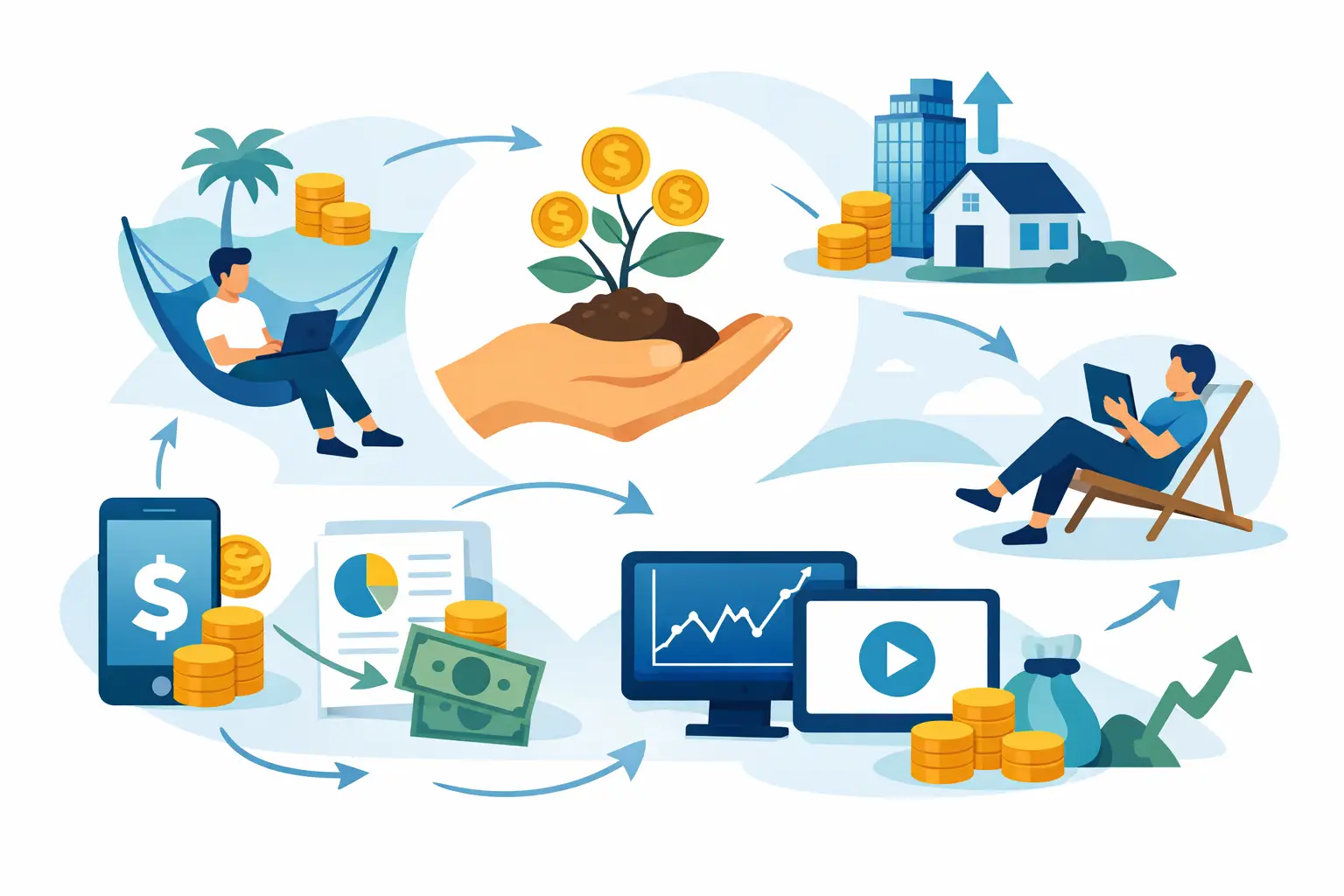
If your income disappears the moment you stop working, you do not have a money problem so much as a structure problem. That is why passive income strategies for beginners attract so much attention. They offer a way to build earnings that are not tied entirely to your hours, which matters whether you want a buffer against rising bills, more freedom in your schedule, or a clearer path towards long-term wealth.
The key is to start with realistic expectations. Passive income is rarely passive at the beginning. Most income streams take either upfront effort, upfront money, or both. For beginners, the smartest move is not chasing the fastest-sounding option. It is choosing a model you can actually stick with long enough to see results.
Quick answer: what is the best passive income strategy for beginners?
If you have more money than time, start with simple investing and interest-based income and build consistency. If you have more time than money, build an asset like a digital product or content that can earn repeatedly. If you are unsure, use a layered approach: stabilise your budget, build a starter emergency fund, reduce high-interest debt, then build one passive income stream at a time.
What passive income really looks like
A lot of people hear passive income and picture money arriving while they sleep, with no maintenance and no risk. Real life is less glamorous, but still worth your attention. Passive income usually sits on a spectrum. On one end, you have investments that need little hands-on work but require capital. On the other, you have digital products or content assets that cost less to start but demand time, testing, and patience.
That trade-off matters. If you have more time than money, your best option may look very different from someone with a lump sum sitting in savings. Neither route is better by default. The goal is to match the strategy to your current season of life, not the version of success social media makes look easy.
A helpful mindset shift is this: passive income is not a trick. It is the result of building assets and systems that keep producing value after the initial effort.
Passive income strategies for beginners that are actually realistic
1. Start with interest and dividend income
For complete beginners, this is often the cleanest starting point. Interest-based savings and long-term investing can produce income or growth with relatively low day-to-day effort.
This will not usually replace your salary quickly, especially if you are starting with a small amount. That is the downside. The upside is that it builds a strong financial base and teaches you one of the most powerful wealth habits: letting money earn money. Even £50 to £100 a month invested consistently can create momentum over time.
If you are nervous about risk, start simple. A beginner does not need a complicated portfolio. You need consistency, basic understanding, and enough patience to avoid pulling out every time markets wobble.
2. Create a digital product once and sell it repeatedly
If you have knowledge people want in a simple format, a digital product can become a strong beginner-friendly income stream. Think planners, templates, printable checklists, mini guides, or beginner workbooks. These products are appealing because the setup cost can be low, and once created, they can be sold many times.
The catch is that creating something people will actually buy takes more thought than many expect. A nice-looking product is not enough. It has to solve a specific problem. A debt tracker for young families, a freelance invoice template, or a moving house checklist can outperform something generic because it feels immediately useful.
This route suits people who enjoy creating resources and are willing to spend time learning what buyers need. It is less passive upfront, but once your product is made and visible, the ongoing workload can be fairly light.
3. Build content that earns through ads or affiliate income
A blog, channel, or niche content page can eventually produce passive income through advertising, sponsorships, or referral commissions. This strategy has a low barrier to entry, which is why many beginners are drawn to it. You can start with a phone, a clear topic, and a willingness to keep showing up.
Still, this is not quick money. Content income often takes months before it becomes meaningful. You need traffic, trust, and a clear understanding of what your audience wants. That said, content can become a powerful asset because one article or video can keep earning long after you publish it.
If you go this route, pick a topic you can talk about for a long time without forcing it. The stronger your niche, the easier it is to build a loyal audience.
4. Sell stock photography, design assets, or creative downloads
This strategy works well for people with a creative or technical skill set. If you enjoy photography, graphic design, illustration, or digital art, you can create assets once and licence them repeatedly. This might include stock images, templates, slides, printable wall art, or digital downloads.
The benefit is that you are building an asset library over time. The challenge is competition. Generic content can get buried, so the more specific and useful your assets are, the better.
For beginners, this can be a smart option if you already have the skill and tools. If you need to learn both the craft and the business side from scratch, expect a slower start.
5. Rent out an underused asset
Passive income does not always mean building something online. Sometimes it means using what you already own more strategically. Renting out a spare room, parking space, storage area, camera equipment, or even occasion wear can create a relatively steady side income.
This is practical because it does not always require creating a product or audience from nothing. You are monetising an asset that already exists. The trade-off is that it can involve admin, maintenance, insurance considerations, and occasional hassle.
Before jumping in, run the numbers honestly. Income sounds attractive, but wear and tear, platform fees, cleaning costs, and time spent coordinating can reduce your profit. A good passive income stream should make your life better, not create a second job you resent.
6. Consider property-style investing with caution
Some beginners look at property-style income because they like the idea of rent-like cash flow without becoming a landlord. This can work, but it is not always as beginner-friendly as it looks.
Some options are simpler than owning a property outright, but they still carry risk. This is one of those areas where optimism needs to be balanced with caution. If you do not yet have an emergency fund or you are carrying expensive debt, this is probably not your first move. Build stability first, then explore higher-risk income options from a stronger position.
7. Buy or build a small income-generating website
This option sits between investing and entrepreneurship. Some people buy small websites that already earn, while others build their own around a niche topic. Once established, a site can continue earning from older content with periodic updates.
For the right person, this can be a brilliant long-term asset. For a beginner, it depends on your willingness to learn search behaviour, content planning, and basic site management. Buying a website can shorten the setup stage, but it also requires careful checking. Building your own takes longer, but teaches you the skill set that makes the income more sustainable.
If that sounds too advanced right now, take the simpler route: build a small site around one useful niche and treat it as a long-term project rather than a quick win.
How to choose the right strategy for you
The best passive income strategy is not the one with the biggest earning claims. It is the one you can begin with your current resources. If you have very little money but decent spare time, digital products and content may suit you. If your time is limited but you can invest regularly, interest-based income and long-term investing may be the better fit.
Temperament matters too. Some people enjoy creating and marketing. Others would rather automate contributions and let time do the heavy lifting. You do not need to force yourself into a strategy that clashes with your strengths.
A useful way to think about this is in layers:
- Stability layer: budgeting, starter emergency fund, reducing high-interest debt
- Foundation layer: consistent investing and simple long-term systems
- Asset layer: content, digital products, and small online businesses
That progression is often more sustainable than jumping straight into advanced ideas because they sound exciting.
Common mistakes beginners make
The biggest mistake is expecting passive income to solve an urgent cash-flow problem overnight. If your bills are tight right now, active income strategies may help faster than passive ones.
Another common mistake is starting too many ideas at once. Spreading yourself across investing, blogging, printables, and rental income usually leads to weak results in all of them. There is also the temptation to copy someone else’s strategy without understanding why it worked for them. Timing and fit matter.
This is where a practical, steady approach wins. Choose one path, give it enough time, track what is working, and improve as you go. That is how momentum builds.
Building wealth rarely begins with one dramatic move. More often, it starts when you decide that even small income streams are worth creating because they buy back options, confidence, and breathing room. Start where you are, keep it simple, and let your first stream teach you how to build the next.