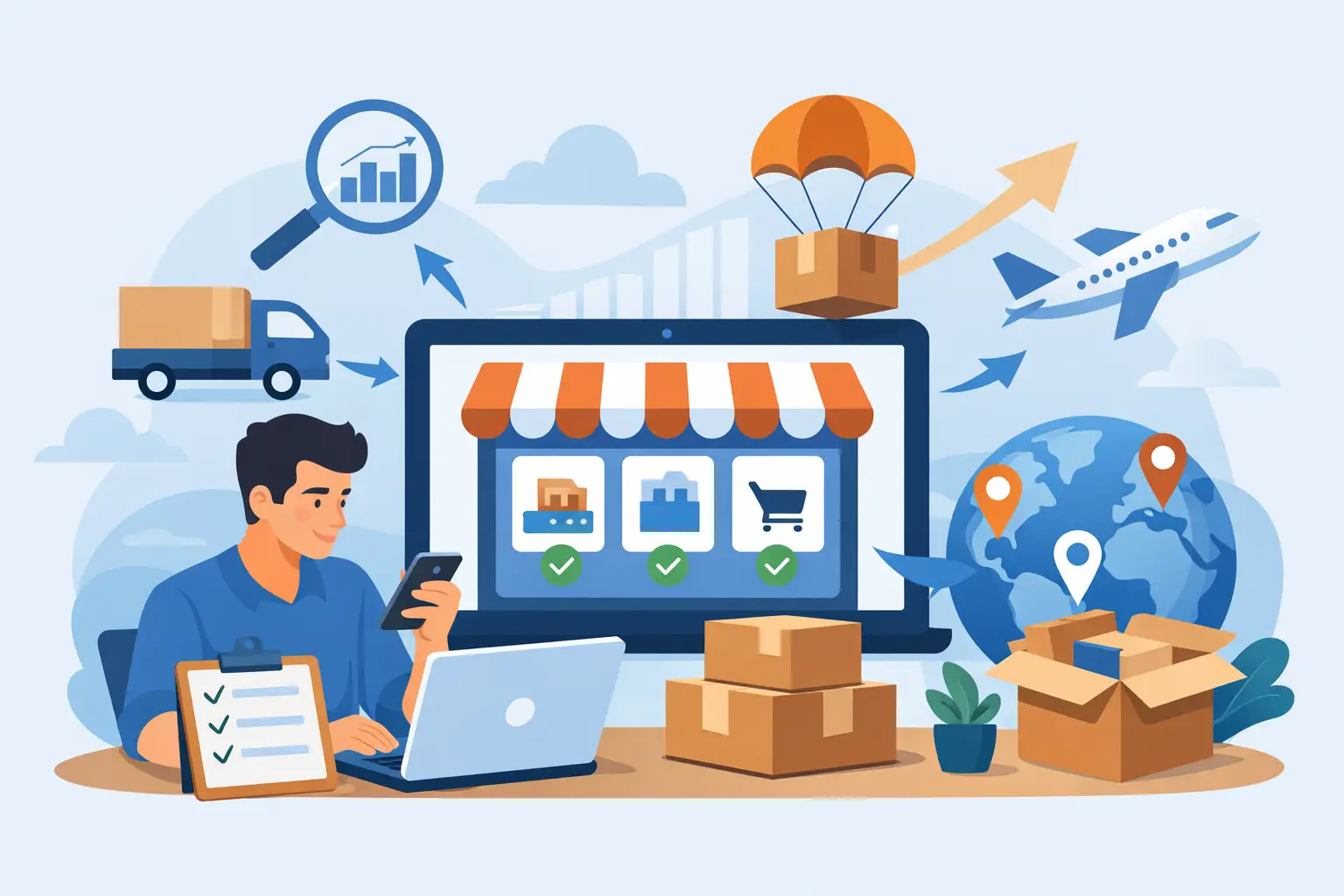
You do not need a warehouse, a huge budget or years of e-commerce experience to build an online shop. That is why so many people search for how to start dropshipping when they want a flexible side income. The catch is that the model is simple to explain but harder to do well, especially if you go in expecting easy money.
Dropshipping can work, but it works best when you treat it like a real business rather than a quick fix for cash. If your goal is to create an extra income stream that could grow over time, this is a sensible place to start. You can test products without buying stock upfront, keep your costs lower than a traditional retail business, and learn valuable online selling skills along the way.
What dropshipping actually is
With dropshipping, you sell products through your own online shop, but a third-party supplier stores and ships the items for you. When a customer places an order, you pass that order to the supplier, who sends it out directly.
Your profit is the difference between what the customer pays and what the supplier charges, after platform fees, payment fees, refunds and advertising costs. That last part matters. On paper, the margins can look attractive. In practice, the businesses that last are the ones that understand their numbers.
This model appeals to beginners because the barrier to entry is lower than most retail businesses. You are not filling your spare room with boxes or tying up savings in stock that might not sell. But low startup costs do not remove the need for research, customer service and careful decision-making.
How to start dropshipping with the right expectations
If you want to know how to start dropshipping successfully, begin with your mindset before your product list. The biggest mistake beginners make is copying whatever looks trendy on social media and hoping sales arrive by magic.
A better approach is to think like a business owner. Ask yourself whether the product solves a real problem, whether people are willing to buy it at a healthy margin, and whether you can market it clearly. A flashy gadget might go viral for a week. A useful, easy-to-explain product often gives you more stable potential.
You should also be realistic about timing. Your first shop is unlikely to replace your salary next month. For most people, dropshipping is a side hustle first and a larger income stream later, if they stay consistent and keep learning.
Choose a niche people already spend money in
A niche is simply the category of products and customers you want to focus on. This is where many new sellers freeze, because they think they need a completely original idea. You do not. You need a product area with clear demand and room for smart positioning.
Good beginner niches often sit in categories like home organisation, pets, fitness accessories, beauty tools or practical lifestyle products. These markets already have buyers. Your job is not to invent demand from nothing. Your job is to serve a specific type of buyer with the right offer.
Try to avoid products that are very fragile, heavily regulated, easy to counterfeit or likely to create lots of returns. Clothing can be profitable, for example, but sizing issues can make customer service messy. Electronics can sell well, but faults and refunds can quickly eat into your margin. For a first shop, simpler products usually mean fewer headaches.
Research products before you build the shop
Before you spend time designing anything, pressure-test the product. Look at what similar items sell for, how many other shops offer them, and what customers complain about in reviews. Complaints are useful. They tell you where the opportunity might be.
If buyers keep saying an item is hard to use, poor quality or badly packaged, that is a warning. If they like the product but dislike the delivery speed or unclear instructions, you may be able to compete by improving the customer experience.
Aim for products with enough margin to absorb fees and still leave profit. A product that costs £12 from a supplier and sells for £19 may look fine at first glance, but once you include transaction fees, ad spend and the occasional refund, there may be very little left.
Find reliable suppliers, not just cheap ones
A supplier can make or break your business. Fast replies, consistent quality and dependable dispatch times matter more than the absolute lowest unit price.
When comparing suppliers, look at order history, reviews, dispatch speed and communication. If possible, order samples yourself. This step saves money in the long run because it helps you spot poor quality before customers do. It also lets you judge packaging, product instructions and delivery times.
For UK buyers, shipping expectations are often tighter than many beginners realise. If delivery takes too long, refund requests and negative reviews can follow. If your audience is in both the UK and the US, check whether your supplier can serve each market efficiently. Sometimes a slightly higher product cost is worth it for better fulfilment.
Set up your shop with trust in mind
You do not need a complicated site to begin. You do need a clean, credible one. Your shop should be easy to navigate, mobile-friendly and clear about what you sell.
Focus on a strong home page, straightforward product pages and basic trust signals. Clear product descriptions, realistic delivery information, a refund policy and contact details all help. So do original product images, if you can get them, or at least well-chosen visuals that match the product accurately.
Many new sellers write vague copy full of hype. That usually hurts conversions. Be direct. Explain what the product does, who it is for, why it helps and what the buyer should expect. Think less like a trend chaser and more like a helpful guide.
Price for profit, not just for sales
A sale is not a win if it leaves you with pennies. One of the smartest things you can do early on is build a simple pricing model.
Take your supplier cost, add shipping, platform fees, payment fees, expected refund costs and any advertising spend. Then work out whether the final retail price is still attractive to customers. If it is not, the product may not be suitable.
This is where dropshipping becomes a real money decision, not just an online business idea. If your margins are too thin, you are buying yourself stress instead of building wealth. Abundant Cents always comes back to the same principle: income streams should support your financial goals, not drain your time and cash.
Market your shop where your customers already pay attention
Once your shop is live, traffic becomes the next challenge. Without visitors, even the best product page will sit quietly doing nothing.
For beginners, short-form social content can be a practical place to test ideas because it costs time more than money. Product demonstrations, before-and-after clips and simple problem-solution videos often work better than polished adverts. If the product benefit is obvious in seconds, you have a stronger chance of getting attention.
Paid adverts can speed things up, but they also increase risk. If your budget is tight, test carefully. Start small, track your numbers and avoid throwing money at a product that has not shown signs of genuine interest. Organic content is slower, but it can teach you what messaging connects before you spend heavily.
Prepare for customer service from day one
This is the part many beginners ignore, but it affects your reputation more than your logo or theme ever will. Customers care about communication. If a parcel is delayed or an item arrives damaged, they want clear updates and fair handling.
Write policies in plain English. Be honest about dispatch and delivery times. Reply promptly. If there is a problem, solve it professionally. Strong customer service can turn a frustrating order into a repeat customer. Poor customer service can wipe out your momentum fast.
Common mistakes when learning how to start dropshipping
The fastest way to lose confidence is to expect instant results from a weak setup. The most common problems are choosing random products, skipping supplier checks, copying generic product descriptions and ignoring the numbers.
Another frequent mistake is trying to sell everything to everyone. General stores can work, but they are harder to brand and market. A focused niche usually makes your messaging clearer and your customer acquisition easier.
There is also the issue of patience. Sometimes a product is not a total failure. It just needs better positioning, sharper creative or a stronger offer. That said, not every product deserves endless testing. Learning when to improve and when to move on is part of the process.
Is dropshipping still worth it?
Yes, for the right person. If you want a low-cost way to learn e-commerce, build sales skills and test products without buying stock, it can be a smart starting point. If you want effortless passive income by next weekend, it will probably disappoint you.
The best reason to start is not because someone online said it is easy. It is because you want to build an asset, even a small one, that teaches you how online business works. Those skills can grow into something much bigger over time.
Start simple. Pick one sensible niche, validate one product properly and get your first version live. Momentum comes from action, and financial freedom is often built one well-chosen step at a time.